Professional Teeth Cleaning in Essen-Rüttenscheid
Professional teeth cleaning in Essen-Rüttenscheid: PZR with EMS AIRFLOW Prophylaxis Master, individual preventive care and a cost guide of approximately €120.
Short answer
Professional teeth cleaning in Essen-Rüttenscheid: PZR with EMS AIRFLOW Prophylaxis Master, individual preventive care and a cost guide of approximately €120.
Professional teeth cleaning (PZR) complements daily oral hygiene in areas where a toothbrush and other home-care aids alone cannot reach everything. Accessible hard and soft deposits as well as biofilm are systematically removed. Depending on the clinical findings, polishing, fluoride measures and guidance on oral hygiene at home may also form part of the treatment.
At the practice in Essen-Rüttenscheid, we use the EMS AIRFLOW Prophylaxis Master for professional teeth cleaning. The exact cleaning procedure and the interval that makes sense for you depend on your individual oral health situation — not on a rigid standard schedule.
Cost guide: approximately €120. The actual fee depends on the scope of treatment and the effort required.
Request an appointment online · Call +49 201 48682900
What is professional teeth cleaning?
PZR is a professional dental preventive measure for cleaning accessible tooth and root surfaces. It goes beyond daily oral care at home and may include areas that are difficult to reach in everyday life — such as interdental spaces, areas around crowns or bridge units and other sites where deposits can accumulate.
The German Dental Association (Bundeszahnärztekammer) describes the removal of hard and soft deposits, polishing and fluoridation, together with advice and instruction on oral hygiene at home, as key components. Which steps are actually necessary in your case depends on the clinical findings.
Professional teeth cleaning is not the same as periodontal treatment. If there is a disease of the tooth-supporting structures that requires treatment, appropriate diagnostics and a separate treatment plan are necessary.
Who may benefit from professional teeth cleaning?
Professional teeth cleaning can form part of an individual preventive-care plan. It may be particularly relevant when deposits accumulate in areas that remain difficult to access despite good oral hygiene at home.
The appropriate scope and interval depend, among other factors, on:
- how quickly deposits form,
- how accessible the interdental spaces are,
- whether fixed dental restorations or implants are present,
- the condition of the gums and tooth-supporting structures,
- and the individual's risk of caries or periodontitis.
For this reason, “twice a year” is not a universal rule for everyone. Longer intervals may be sufficient for people at low risk, while shorter intervals may be indicated where the risk is higher. The KZBV commonly refers to one or two appointments per year, while explicitly emphasising that the frequency should be adjusted to the individual's risk of disease.
How professional teeth cleaning is carried out at the practice
The specific procedure is adapted to the situation in your mouth. Not every tooth and not every patient requires the same instruments or the same amount of treatment time.
1. Assessing the initial situation
Before cleaning begins, we assess where deposits are present and which areas require particular attention. This may also reveal areas where oral hygiene at home could be improved.
2. Removing biofilm and deposits
Our practice uses the EMS AIRFLOW Prophylaxis Master for professional teeth cleaning. The system is designed for the professional removal of biofilm and deposits. Depending on the type and location of the deposits, other appropriate instruments may also be used.
The important factor is not the name of the device, but whether the cleaning method is appropriate for the particular surface and clinical findings. AIRFLOW therefore neither replaces a dental examination nor automatically replaces every other cleaning step.
3. Including interdental spaces and difficult-to-reach areas
Interdental spaces, crown margins, bridge units and other hard-to-reach areas require particular attention because they are often more difficult to clean with a toothbrush alone. Which areas are treated depends on your individual situation.
4. Finishing the surfaces and discussing preventive care
Depending on what is required, surface polishing and appropriate fluoride measures may form part of professional teeth cleaning. Advice on toothbrushes, interdental cleaning or other aids is intended above all to show you what is appropriate for your own oral health situation at home.
What can AIRFLOW do — and what can it not do?
AIRFLOW uses a mixture of water, powder and air to remove biofilm and certain superficial deposits. This can be particularly useful on difficult-to-reach surfaces and for external discolouration.
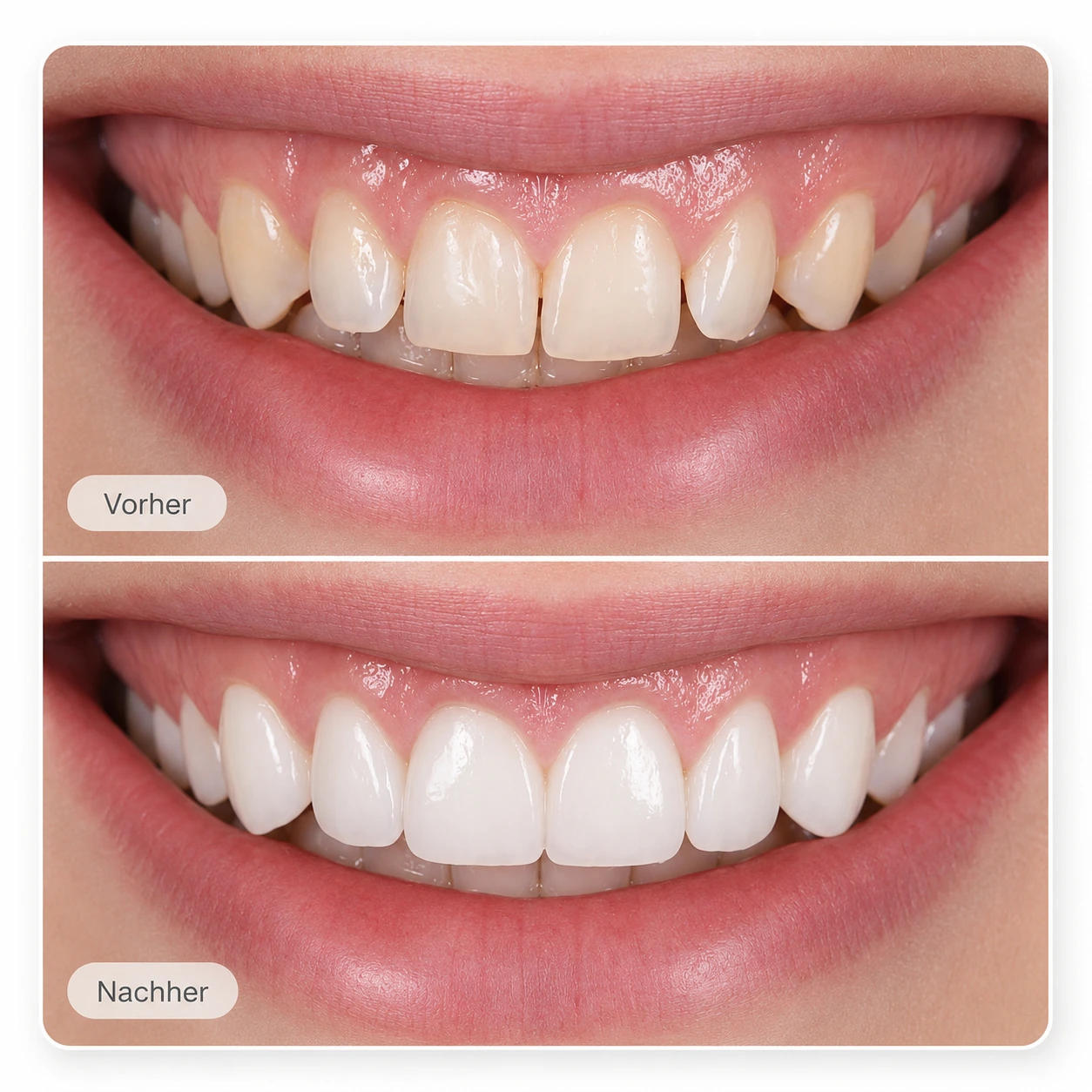
Coffee, tea or tobacco can cause superficial staining that may be partially removed as part of professional cleaning. As a result, the teeth may look cleaner and visually brighter after PZR. However, the natural colour of the teeth is not chemically lightened.
This is precisely the difference from bleaching: PZR cleans the surfaces of the teeth; bleaching changes the colour of natural teeth through a whitening procedure.
Is professional teeth cleaning painful?
People experience PZR differently. If you have sensitive tooth necks, inflamed gums or extensive deposits, individual steps of the treatment may feel uncomfortable or cause temporary sensitivity. It would therefore not be appropriate to make a blanket promise that professional teeth cleaning is pain-free.
If you have sensitive teeth or have found previous teeth-cleaning appointments uncomfortable, please tell us before treatment begins. The procedure can then be adapted to your situation.
Can there be discomfort after PZR?
After professional teeth cleaning, the teeth or gums may temporarily feel more sensitive, particularly if sensitive tooth necks or irritated gums were already present. The extent to which this is noticed varies from person to person.
If symptoms are unusually severe or persist for longer, the cause should be assessed by a dentist.
How often should professional teeth cleaning be carried out?
The interval should be based on your personal risk and oral health findings. For many people, one or two appointments per year may be appropriate; shorter intervals may make sense where the risk of caries or periodontitis is higher. Conversely, frequent professional cleaning is not automatically necessary for everyone.
At the practice, the appropriate time for your next appointment is therefore not determined by the calendar alone, but discussed on the basis of your individual oral health situation.
How much does professional teeth cleaning cost at our practice?
As a guide, professional teeth cleaning at the practice costs approximately €120.
Professional teeth cleaning is billed according to the German Dental Fee Schedule (GOZ). GOZ item 1040 describes the service per tooth, implant or bridge unit; the actual cost may therefore vary depending on the individual scope of treatment and the effort required. The figure of approximately €120 is not a guaranteed fixed price.
Professional teeth cleaning is not routinely included in the standard benefits provided by statutory health insurance. Some health insurers do, however, offer voluntary contributions towards the cost. Whether and to what extent your health insurer or supplementary dental insurance will reimburse the cost depends on its current terms or your individual policy. We therefore cannot provide a general guarantee of reimbursement.
PZR or bleaching: what do I need for brighter teeth?
That depends on what is causing the teeth to appear darker. If the main issue is external deposits or staining on the tooth surfaces, professional cleaning may already make a visible difference. If the natural tooth colour itself is to be lightened, this is a different matter and — following a dental assessment — may involve bleaching.
Professional teeth cleaning should therefore not be presented as a “small bleaching treatment”. The two procedures have different objectives.
Professional teeth cleaning with implants, crowns or bridges
Individually adapted oral hygiene is also important if you have dental restorations or implants. Surfaces, transitions and interdental areas may have different cleaning requirements from a fully natural dentition.
Whether professional teeth cleaning is appropriate, and to what extent, also depends on the clinical findings in these situations. With implants in particular, professional cleaning does not replace necessary diagnostic assessment if signs of inflammation are present.
Frequently asked questions about professional teeth cleaning
Does professional teeth cleaning remove tartar?
As part of professional teeth cleaning, accessible hard and soft deposits are removed according to the clinical findings. The GOZ service description for professional teeth cleaning includes systematic cleaning of accessible tooth and root surfaces, including biofilm removal and other preventive-care measures.
Does AIRFLOW make teeth whiter?
AIRFLOW can remove biofilm and certain external stains. This can make the teeth appear cleaner and brighter. However, it does not chemically lighten the natural tooth colour in the way that bleaching does.
How long does professional teeth cleaning take?
A fixed treatment time cannot reasonably be stated because the number of teeth, amount of deposits, difficult-to-reach areas, dental restorations and individual cleaning requirements all affect the amount of work involved. For this reason, our practice does not specify a universal treatment duration.
How often do I need professional teeth cleaning?
This depends on your individual risk of caries and periodontitis as well as your oral health situation. One or two appointments per year are often mentioned; shorter intervals may be appropriate where the risk is higher. Your personal schedule should be determined on the basis of the clinical findings.
Does health insurance cover the cost?
Professional teeth cleaning is not routinely included in the standard benefits provided by statutory health insurance. Some health insurers provide voluntary contributions towards the cost. You should therefore check the current benefits offered by your health insurer or supplementary insurance policy.
Can I eat and drink immediately after PZR?
This also depends on which finishing measures were carried out. Rather than applying a general rule about a fixed number of hours, you will receive instructions after treatment that are appropriate for the measures actually used and your individual oral health situation.
Is PZR the same as preventive dental care?
The terms are often used together in everyday language, but they are not completely identical. Preventive dental care refers to the broader prevention concept; professional teeth cleaning can be one part of it. Depending on the situation, preventive care may also include advice, oral-hygiene instruction and an individual risk assessment.
Request a PZR appointment in Essen-Rüttenscheid
Dr. med. dent. J. Hayim M.Sc. Rüttenscheider Str. 194–196 45131 Essen
Phone: +49 201 48682900 Email: praxis@hayim.de
Appointments can be requested using the online appointment form. If arranging an appointment by phone is difficult for you, you can also use the practice's callback option.
Request an appointment online · Call · Request a callback
Professional sources
The medical information on this page was cross-checked in particular against patient and professional information from the German Dental Association (BZÄK) and the National Association of Statutory Health Insurance Dentists (KZBV). Information about the EMS AIRFLOW Prophylaxis Master describes the system used at the practice and the manufacturer's stated product characteristics; no claims of effectiveness or guaranteed outcomes are derived from these statements.
Editorial review date: 8 August 2026. Medical information does not replace an individual dental examination or consultation.
Further information
Sources
- Professionelle Zahnreinigung · KZBV
- Professional teeth cleaning for preventive care · Bundeszahnärztekammer (BZÄK)
- GOZ No. 1040 – Professional teeth cleaning · Bundeszahnärztekammer (BZÄK)
- AIRFLOW Prophylaxis Master · EMS Dental
- AIRFLOW PLUS · EMS Dental