Veneers in Essen-Rüttenscheid: Options, Limitations and Procedure
Veneers at the practice in Essen-Rüttenscheid: suitability, prep and non-prep veneers, CEREC workflow, risks, alternatives and costs from approximately €800.
Short answer
Veneers at the practice in Essen-Rüttenscheid: suitability, prep and non-prep veneers, CEREC workflow, risks, alternatives and costs from approximately €800.
Veneers are thin ceramic shells that are adhesively bonded to visible tooth surfaces. They may be considered for certain aesthetic or restorative concerns involving the front teeth — for example, when the colour, shape or minor defects of a tooth are to be changed.
What matters, however, is not only how a veneer will look afterwards, but also how much healthy tooth structure would need to be altered to achieve the result. at the practice in Essen-Rüttenscheid, we therefore assess before treatment whether a veneer is appropriate at all, whether preparation can be kept as enamel-preserving as possible and whether a less invasive alternative could achieve the same goal.
In suitable cases, ceramic veneers can be manufactured and placed in a single appointment using the digital CEREC workflow. This does not apply automatically to every case. Non-prep veneers are used only rarely at our practice and only when the tooth shape and available space genuinely allow this approach.
Cost guide: veneers from approximately €800. The actual cost depends on the clinical findings, number of teeth, material and manufacturing requirements and the specific treatment plan.
Request an appointment online · Call +49 201 48682900
What is a veneer?
A veneer is a custom-made ceramic shell that is permanently bonded to a tooth using adhesive techniques. Unlike a conventional crown, a veneer typically does not cover the entire tooth, but primarily the visible tooth surface.
In suitable situations, a veneer can therefore require substantially less removal of tooth structure than a full crown. How conservative the treatment actually is, however, depends on the original tooth and the planned change. A veneer is therefore not automatically “non-invasive”.
When can veneers be appropriate?
Depending on the clinical findings, veneers may be considered for situations including:
- variations in the shape of individual front teeth,
- small chipped areas or other suitable defects,
- visible gaps where restorative correction is medically and aesthetically appropriate,
- discolouration that cannot be changed sufficiently through teeth whitening,
- older restorations that are aesthetically unsatisfactory,
- certain mild positional or proportional discrepancies where a restorative solution is considered reasonable compared with orthodontic treatment.
This is not an automatic list of indications. Particularly where teeth are misaligned, it must first be considered whether the desired change could be achieved more appropriately through orthodontic treatment without altering healthy tooth structure purely to create an optical correction.
A veneer is also not always sufficient for a severely damaged tooth. In such cases, another type of restorative treatment may be required.
Prep veneers and non-prep veneers: what is the difference?
The main difference is whether, and to what extent, the tooth surface needs to be prepared.
Veneers with preparation
For many veneer restorations, a limited amount of tooth structure is removed to create sufficient space for the ceramic and to allow the shape, transitions and tooth contour to be designed appropriately.
The aim is to keep preparation as conservative as possible. Scientific studies indicate that bonding conditions are particularly favourable when as much enamel as possible is preserved for adhesive bonding. This does not support a standardised amount of reduction, but rather planning that is tailored to the individual tooth.
Once healthy tooth structure has been permanently removed, this step cannot be reversed. A prepared tooth will therefore generally continue to require a restorative covering in the long term.
Non-prep veneers
In selected situations, a non-prep veneer may be placed without reducing the tooth or with preparation kept to a minimum.
Although this may initially sound universally advantageous, it is anatomically appropriate for only some patients. If there is already little available space or if the tooth shape or position is unfavourable, adding a ceramic layer without creating sufficient space can result in excessive bulk or unfavourable transitions.
At the practice, non-prep veneers are therefore used only rarely and when the tooth shape is suitable. “No drilling” or “no preparation” is not a sales promise for us, but a possible treatment variant when the starting situation allows it.
Why does veneer treatment begin with planning?
For an aesthetic restoration of the front teeth, several factors need to work together: tooth colour, shape, length, position, gum line, existing fillings and the relationship between the teeth when biting.
For this reason, the desired appearance is not the only factor discussed before making a decision. The tooth structure, absence of untreated caries, existing restorations, gums and functional factors are also assessed.
In patients with pronounced teeth grinding or other high mechanical loads, for example, it must be taken into account that ceramic restorations may be exposed to greater stress. Aesthetic planning must not disregard these functional risks.
If several front teeth are to be treated, it is also important to consider whether bleaching or other measures should be carried out before the final shade is selected. Ceramic veneers do not become lighter with subsequent bleaching.
How does veneer treatment at the practice work?
The specific procedure depends on how many teeth are being treated, whether preparation is necessary and which manufacturing workflow is suitable for the clinical situation.
1. Examination and treatment objective
The first step is to clarify what you would like to change and whether the teeth are suitable for veneers. Alternatives are also discussed. If the only concern is tooth colour, for example, bleaching may be more appropriate; smaller defects may in some situations be restored directly with composite.
2. Shape and shade planning
The planned shape must fit with the neighbouring teeth, gums and face. The aim is not a standardised tooth shape, but a restoration that suits the existing situation.
3. Preparation only to the extent required
If preparation is necessary, the amount depends on the tooth shape, desired change and material requirements. A non-prep approach is only a meaningful option when sufficient space is available and a functionally and aesthetically appropriate transition can be achieved.
4. Digital manufacturing with CEREC in suitable cases
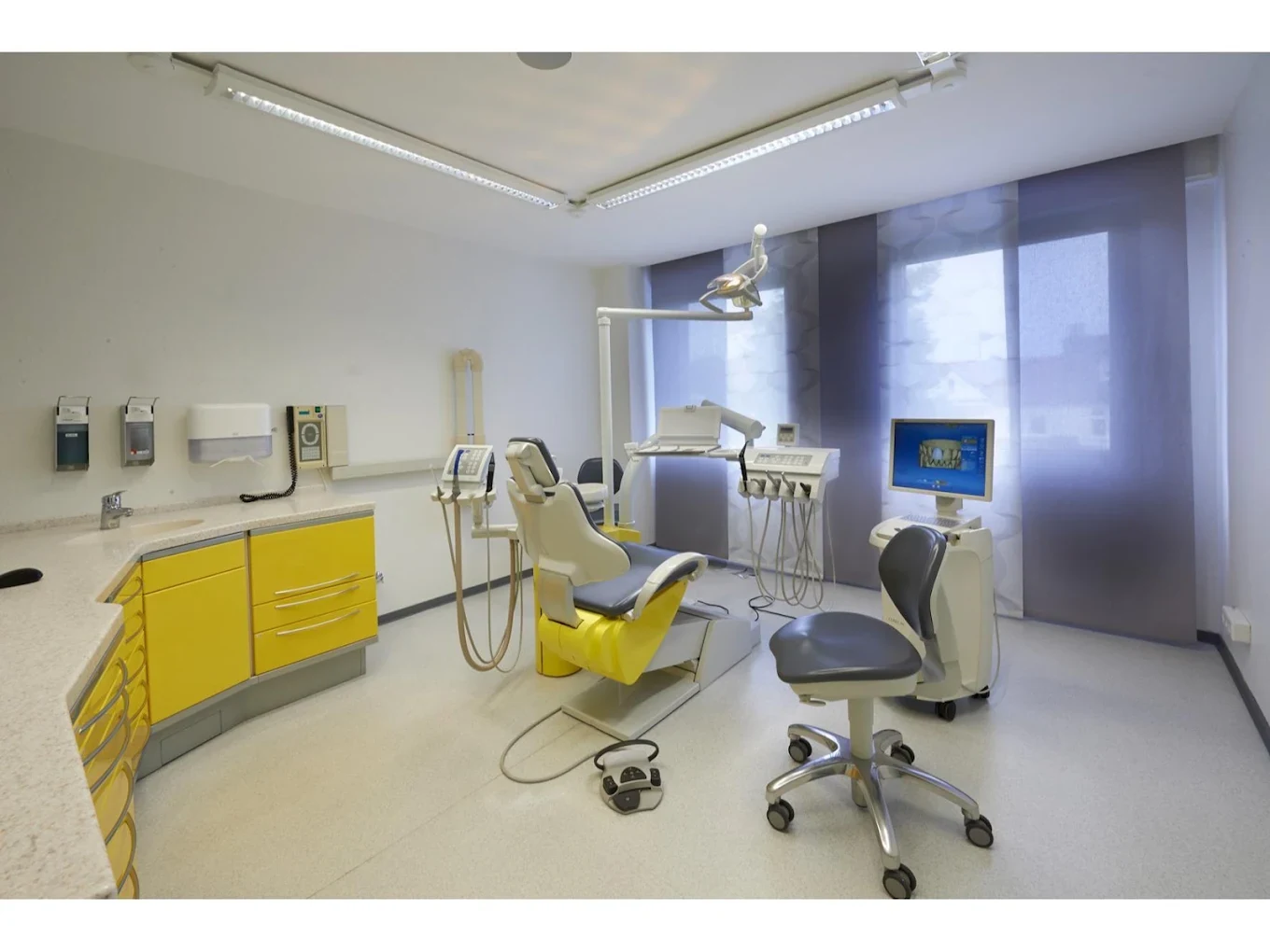
The practice uses a digital CEREC workflow together with its own milling and ceramic technology. In suitable cases, veneers can be manufactured and placed in a single appointment.
This explicitly does not mean that every veneer treatment is automatically completed in one appointment. More extensive aesthetic changes, special material or characterisation requirements, or other clinical reasons may require a different workflow.
5. Try-in and adhesive bonding
Before final bonding, the fit, shape, contacts and aesthetic appearance are checked. The veneer is then secured to the tooth using an adhesive bonding procedure.
What material are veneers made from?
This page concerns ceramic veneers. Dental ceramics are used for these restorations because their shape, surface and tooth colour can be individually designed and because they can be adhesively bonded.
The specific ceramic material used for a particular veneer is a technical and clinical decision. The appropriate type of ceramic is selected for the individual case. We therefore deliberately do not present any one material as the universal solution for every veneer.
Are veneers reversible?
That depends on the treatment approach.
If tooth structure is prepared for a veneer, this removal of tooth structure is irreversible. The veneer itself can later be replaced, but the natural tooth structure that was previously removed does not grow back.
In genuine non-prep situations, the original tooth structure can largely be preserved. Even so, a non-prep veneer should not be regarded as a fashion product that can simply be placed and removed without consequences. Bonding, surface treatment and any future restorative needs must be planned from a dental perspective.
Especially when the teeth are healthy, one simple question is therefore important: could a less invasive treatment achieve the desired goal as well?
What risks and problems are possible?
Ceramic veneers are an established restorative treatment, but they are not free from complications. Possible problems include:
- fracture or chipping of the ceramic,
- loss of adhesive bonding,
- marginal discolouration or aesthetic changes over time,
- caries affecting a restored tooth,
- temporary or longer-lasting sensitivity,
- gum irritation where transitions are unfavourable or cleaning is made more difficult,
- the need for repair or later replacement.
Risk does not depend on the material alone. The amount of preparation, proportion of enamel preserved, bite situation, existing restorations, oral hygiene and loading habits can all influence the long-term prognosis.
For this reason, a fixed statement such as “veneers last 10, 15 or 20 years” would not be reliable for an individual patient.
How long do veneers last?
Current systematic reviews show that ceramic veneers can perform well over the long term. At the same time, technical and biological complications do occur, and outcomes vary according to the bonding substrate, preparation, material and individual patient situation.
Preserving enamel is particularly relevant. More recent reviews report more favourable survival and success rates when veneers can be bonded predominantly to enamel compared with situations involving substantial dentine exposure.
However, such studies cannot provide an individual guarantee of durability. For your own restoration, the specific tooth, the loads placed on it and subsequent care are more important than a general number of years stated on a website.
Veneers, bleaching, composite or orthodontics?
Not every aesthetic concern requires a veneer. The appropriate alternative depends on what actually needs to be changed.
If tooth colour is the main concern
Professional bleaching may be the more conservative option if natural teeth are to be lightened and the clinical conditions are suitable.
Bleaching in Essen-Rüttenscheid
For small defects or shape corrections
Depending on the defect, direct composite restorations may provide an option for correcting tooth shape or small losses of tooth structure without using a ceramic veneer. The current German S3 guideline on direct composite restorations confirms composite as an established restorative procedure; whether it is the appropriate aesthetic and functional solution must be assessed for the individual tooth.
More about dental fillings and composite
If tooth position is the main concern
Where teeth are misaligned, orthodontic treatment can change the actual tooth position without requiring healthy tooth surfaces to be prepared solely to disguise the alignment visually. The effort involved and treatment duration are different, but this option should at least be considered before making an irreversible restorative change.
If the tooth structure is severely damaged
If a tooth is already extensively damaged, a veneer may not provide sufficient protection or retention. Other ceramic restorations or a crown may then be more appropriate.
What is important after treatment?
Veneers require the same consistent oral hygiene as natural teeth and other fixed restorations. Clean margins along the gum line and proper interdental cleaning are particularly important.
Regular dental check-ups allow the veneers, bonding margins, neighbouring teeth and gums to be assessed together. Professional teeth cleaning may form part of your preventive-care plan depending on your individual risk.
If you grind or clench your teeth, the load placed on the restorations should be taken into account during planning and follow-up care. Whether additional protective measures are appropriate depends on the clinical findings.
How much do veneers cost at the practice?
For ceramic veneers at the practice, the cost guide starts at approximately €800.
The actual price may be higher depending on the tooth, number of veneers, necessary pretreatment, manufacturing workflow and treatment effort. Veneers are a privately paid treatment at our practice. Before treatment, you will receive specific cost information based on the examination and treatment planning.
The figure “from approximately €800” is therefore neither a guaranteed fixed price for every possible case nor an all-inclusive price for any number of teeth.
Frequently asked questions about veneers
Do teeth always have to be prepared for veneers?
No, but limited preparation is often appropriate or necessary. How much tooth structure needs to be altered depends on tooth position, shape, available space and the planned result. Genuine non-prep veneers are suitable only for appropriate anatomical situations.
Does the practice offer non-prep veneers?
Yes, but only rarely, when the tooth shape and available space allow them. We do not present non-prep treatment as inherently better, because placing a veneer without sufficient space can result in an unfavourable contour.
Can veneers at the practice be completed in one day?
In suitable cases, yes. The practice has a digital CEREC workflow that allows veneers to be manufactured and placed in a single appointment in appropriate situations. Whether your case is suitable for this approach is determined after examination and planning.
Can veneers correct crooked teeth?
Veneers can alter the visible shape of a tooth and may therefore visually compensate for certain mild discrepancies. They do not, however, move the tooth. If the tooth position itself should be corrected, an orthodontic solution should be considered.
Which is better: veneers or bleaching?
The procedures have different objectives. Bleaching changes the colour of natural teeth. Veneers change a visible tooth surface and can additionally modify shape or correct minor defects. If tooth colour is the only concern, bleaching may be the less invasive option.
Can veneers be removed later?
A veneer can technically be removed or replaced. If natural tooth structure was prepared beforehand, however, the original condition of the tooth cannot be restored. The decision should therefore be made carefully, particularly when the teeth are largely healthy.
How long do veneers last?
There is no reliable fixed number of years that applies to every patient. Ceramic veneers show good long-term outcomes in studies, but they can fracture, debond or require replacement for other reasons. Prognosis and care depend, among other factors, on tooth structure, bonding, mechanical loading and oral health.
How much does one veneer cost?
At the practice, the cost guide starts at approximately €800. The specific price is determined after examination and treatment planning.
Veneer consultation in Essen-Rüttenscheid
If you are considering veneers, the most important initial decision is not how many veneers you need, but what change you would like to achieve and which method can accomplish it as appropriately and conservatively as possible.
Dr. med.dent.J.Hayim M.Sc. M.Sc. Rüttenscheider Str. 194–196 45131 Essen
Phone: +49 201 48682900 Email: praxis@hayim.de
Request an appointment online · Call · Request a callback
Professional basis
The medical statements on this page were cross-checked, among other sources, against the professional statement of the German Society of Dentistry and Oral Medicine (DGZMK) on ceramic restorations, current patient information from professional dental organisations and more recent systematic reviews on ceramic veneers.
The older DGZMK statement on ceramic veneers is marked as archived and was therefore not used as the sole basis for current evidence. More recent systematic reviews were also considered, particularly regarding long-term performance, complications and the importance of the bonding substrate.
Editorial review date: 8 August 2026. This page does not replace an individual dental examination or consultation.
Sources
- Professional medical information · C. Medical/professional sources
- Zahnärztekammer Westfalen-Lippe patient page · Zahnärztekammer Westfalen-Lippe patient page
- Initiative proDente 2024 · Initiative proDente 2024
- Initiative proDente veneer information · Initiative proDente veneer information
- Systematic review, 2025 publication / PubMed 38604905 · PubMed
- Systematic review/meta-analysis, PubMed 39523553 · PubMed
- Systematic review, PubMed 38786642 · PubMed
- AWMF S3 direct composite guideline, 2024 · AWMF